



Explore Our Frequently Asked Questions Page
- All Topics
- All Topics
- Tooth Sensitivity
- How Sensodyne Works
- Sensodyne Ingredients
- Sensodyne Products
- Sensodyne and Whitening
- Enamel Erosion
Tooth Sensitivity
-
Why are my teeth sensitive?
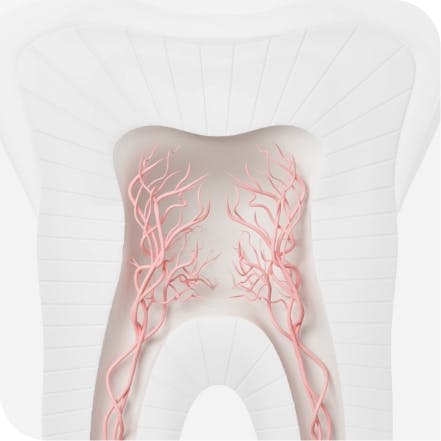
Sensitive teeth, or dentin hypersensitivity, can develop over time as a result of enamel wear and/or receding gums and can occur when the softer, inner part of the tooth called ''dentin'' becomes exposed. Thousands of microscopic channels run through the dentin toward the center of the tooth, where the nerves lie. Once the dentin is exposed, certain triggers (such as a cold or hot drink) can stimulate the nerves, resulting in that characteristic short, sharp jolt of tooth sensitivity pain.
Once dentin is exposed, there is no going back, but you can easily get sensitivity protection by brushing with Sensodyne toothpaste twice a day, every day.
-
What causes sensitive teeth to hurt?
That sharp shock, jolt, or even minor twinge of pain you feel is usually caused by these common triggers below:
- Cold foods or drinks
- Breathing in cold air
- Hot foods or drinks
- Sugary foods
- Sour foods
- Brushing your teeth
Learn more about the symptoms of sensitivity and what can cause it here.
-
Are sensitive teeth common?
-
Can overbrushing cause sensitive teeth?
Yes, brushing too hard or too frequently can contribute to gum recession and/or enamel wear, which, over time, can expose the soft, inner layer of your tooth, known as dentin, and can lead to sensitive teeth. The ADA recommends that you brush for 2 minutes twice a day with a soft-bristled or electric toothbrush. Using Sensodyne toothpaste twice a day, every day, can help.
-
Are sensitive teeth a sign of a more serious dental problem?
There are many different causes of tooth pain other than tooth sensitivity. For example, a cracked tooth or a cavity (tooth decay) can become serious if left untreated. If you are feeling any tooth pain or discomfort, especially if it persists, the best thing you can do is visit your dentist and seek professional advice.
-
What can I do to help my sensitive teeth?
Although once you have sensitive teeth it cannot be reversed, switching to a daily sensitivity toothpaste, like Sensodyne, can protect against the symptoms of sensitivity when used twice a day, every day. Sensodyne is specially formulated for tooth sensitivity relief and is the #1 dentist recommended toothpaste brand for sensitive teeth.
In addition, talk to your dentist about the symptoms you are experiencing. Your dentist can confirm whether or not tooth sensitivity is the cause of your tooth pain and then advise you on how to best care for sensitive teeth.
-
What is the #1 dentist recommended toothpaste for sensitive teeth?
How Sensodyne Works
-
How does Sensodyne toothpaste work?
Sensodyne toothpastes work in 1 of 2 ways:
- Sensodyne toothpastes with potassium nitrate work to soothe the nerves inside your teeth from feeling pain from triggers.
- Sensodyne toothpastes with stannous fluoride build a protective layer over the exposed dentin to create a barrier from painful triggers. Both formulations are proven to relieve and protect against tooth sensitivity pain when you brush twice a day, every day.
To learn more about Sensodyne toothpastes, see our full range of products.
-
How long does Sensodyne toothpaste take to work?
Sensodyne Rapid Relief can relieve sensitivity* in as little as 3 days, while other Sensodyne toothpastes may take up to 2 weeks.* It’s important to continue brushing with Sensodyne toothpaste twice a day, every day, for lasting tooth sensitivity relief. However, if pain/sensitivity still persists after 4 weeks of use, visit your dentist as your sensitive teeth may indicate a more serious problem. To maintain sensitivity relief, continue to use Sensodyne twice a day as your daily toothpaste.
*With twice daily brushing
-
How often should I use Sensodyne toothpaste?
Use Sensodyne as your daily toothpaste, brushing twice a day, every day, for lasting tooth sensitivity relief. With Sensodyne, you can also get the benefits of fluoride, cavity protection, and fresh breath to help you maintain healthy and sensitivity-free teeth.
Learn more about the ingredients in Sensodyne and how they work to reduce tooth sensitivity here.
-
Will my teeth become sensitive again if I stop using Sensodyne?
If you stop brushing with Sensodyne toothpaste, your sensitivity can return, so it is best to make Sensodyne your daily toothpaste to get long-lasting relief. All Sensodyne toothpastes also provide the benefits of fluoride, cavity protection, fresh breath, and other benefits.
Learn more about all the Sensodyne toothpastes here.
-
Does Sensodyne toothpaste help prevent cavities?
-
Can I use Sensodyne toothpaste every day?
Sensodyne Ingredients
-
What are the active ingredients in Sensodyne toothpastes?
Sensodyne toothpastes contain stannous fluoride or potassium nitrate as anti-sensitivity agents that work by either creating a barrier over sensitive areas or by soothing the nerves inside your tooth.
All Sensodyne products contain fluoride, which helps fight against cavities, so you can maintain healthy teeth, every day.
Most Sensodyne toothpastes are also free of sodium lauryl sulfate (SLS), an inactive ingredient that makes toothpastes foamy when brushing. The following toothpastes do not contain SLS:
- Sensodyne Fresh Impact
- Sensodyne White Mint
- Sensodyne White Extra Fresh
However, for those who still prefer brushing with a foamier toothpaste, Sensodyne Deep Clean, Sensodyne Rapid Relief, Sensodyne Sensitivity & Gum, Sensodyne Complete Protection, and Sensodyne Repair and Protect toothpastes do contain SLS while still alleviating tooth sensitivity.
Learn more about all the Sensodyne toothpastes here.
-
Does Sensodyne toothpaste have fluoride?
All Sensodyne toothpastes contain fluoride, which is a naturally occurring mineral that rapidly enters mineralized tissue, such as bone and developing teeth. It hardens tooth enamel, protecting against tooth decay (cavities), so you can maintain healthy teeth every day.
Learn more about the ingredients in Sensodyne and how they work to reduce tooth sensitivity here.
-
What is stannous fluoride and how is it used in Sensodyne toothpaste?
Stannous fluoride is a type of fluoride that builds a robust layer over the exposed, soft, inner part of your tooth called dentin, acting like a shield for your sensitive teeth. This layer helps prevent triggers, like hot and cold liquids, from reaching the nerves and causing pain.
Sensodyne Complete Protection, Sensodyne Repair and Protect, Sensodyne Rapid Relief and Sensodyne Sensitivity & Gum toothpastes all contain stannous fluoride.
-
What is potassium nitrate and how is it used in Sensodyne toothpaste?
Potassium nitrate is a mineral that helps soothe the nerves inside your teeth, preventing triggers, like a burst of cold air or hot coffee, from causing sensitivity pain.
Sensodyne Essential Care and Sensodyne White toothpastes all contain potassium nitrate.
-
Does Sensodyne toothpaste contain SLS (sodium lauryl sulfate)?
Most Sensodyne toothpastes are also free of sodium lauryl sulfate (SLS), an inactive ingredient that makes toothpastes foamy when brushing. The following toothpastes do not contain SLS:
- Sensodyne Fresh Impact
- Sensodyne White Mint
- Sensodyne White Extra Fresh
However, for those who still prefer brushing with a foamier toothpaste, Sensodyne Deep Clean, Sensodyne Rapid Relief, Sensodyne Sensitivity & Gum, Sensodyne Complete Protection, and Sensodyne Repair and Protect toothpastes do contain SLS while still alleviating tooth sensitivity.
Learn more about all of the Sensodyne toothpastes here.
-
Does Sensodyne toothpaste contain triclosan?
-
Is Sensodyne toothpaste gluten free?
-
Are Sensodyne toothpastes kosher?
Haleon Consumer Healthcare only uses high-quality ingredients in its products. Following a review of the product formulations and supplier documentation, we have not received confirmation from all our suppliers that all individual ingredients are certified as halal and/or kosher. As a result, we have not formally confirmed or labeled the finished products as halal or kosher. Prior to using a product, we recommend you always check the list of ingredients printed on the pack and follow the label instructions.
-
Does Toothpaste Expire?
Using toothpaste past its expiration date isn’t recommended and expired toothpaste’s effectiveness cannot be guaranteed. Every toothpaste’s expiration date varies, so look at your tube of toothpaste’s “Use By” date to determine if your toothpaste is still useable.
For more information on Sensodyne toothpastes’ active and inactive ingredients, see What Is in Sensodyne?
Sensodyne Products
-
Does Sensodyne toothpaste come in different varieties?
Sensodyne toothpaste comes in many different variations to meet individual needs and preferences. All our toothpastes contain fluoride, which helps to protect teeth from cavities.
- Sensodyne Extra Whitening
- Sensodyne Fresh Mint
- Sensodyne Full Protection
- Sensodyne Deep Clean
- Sensodyne Tartar Control
- Sensodyne Fresh Impact
- Sensodyne Rapid Relief (available in Mint, Extra Fresh, or Whitening)
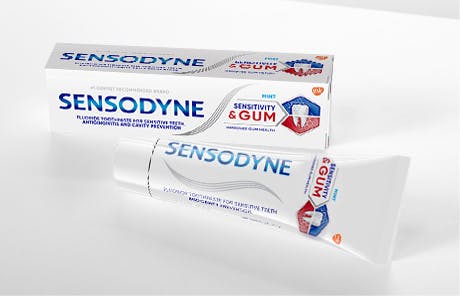
- Sensodyne Sensitivity & Gum(available in Mint or Whitening)
- Sensodyne White (available in Mint or Extra Fresh)
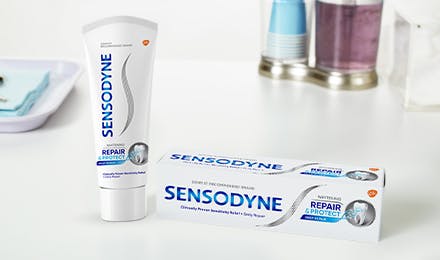
- Sensodyne Repair and Protect (available in Original, Extra Fresh, or Whitening)
- Sensodyne Complete Protection (also available in Extra Fresh)
-
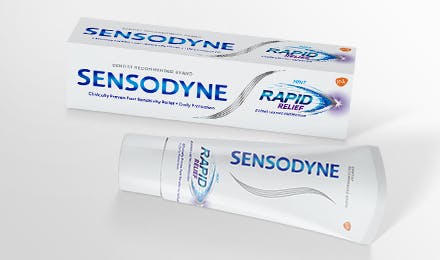
How does Sensodyne Rapid Relief toothpaste work?
Sensodyne Rapid Relief toothpaste uses an active ingredient called stannous fluoride to build a protective barrier over exposed dentin, the inner layer of your teeth. At the first brush, it starts to form a shield that quickly blocks the tiny holes in the sensitive areas of your teeth. Brushing twice a day, every day, provides clinically significant sensitivity relief in as little as 3 days and thereafter, giving you the relief you want in the time you need it.
-
Is Sensodyne Rapid Relief toothpaste right for me?
If you want to beat sensitivity pain fast, Sensodyne Rapid Relief toothpaste provides clinically proven sensitivity relief in just 3 days when you brush twice a day, every day.
Sensodyne Rapid Relief is available in either Mint or Extra Fresh flavors.
-
How often should I use Sensodyne Rapid Relief toothpaste?
Use Sensodyne Rapid Relief (or any Sensodyne toothpaste) as your daily toothpaste, brushing twice a day, every day, for lasting sensitivity relief—along with the benefits of fluoride, cavity protection, and fresh breath—so you can maintain healthy teeth.
-
Is Sensodyne an abrasive toothpaste?
-
Is Sensodyne toothpaste available in a travel-sized tube?
Sensodyne Rapid Relief Mint, Sensodyne Sensitivity & Gum Mint, Sensodyne Extra Whitening, Sensodyne Fresh Impact, and Sensodyne Deep Clean are available in a travel size at major retail outlets, in-store, and online.
-
Can kids use Sensodyne toothpaste?
-
Is there a link between sensitive teeth and bleeding gums?
Sensitive teeth and gum problems can go hand in hand. If you’re dealing with sensitivity pain, you could also be suffering from gum recession—a cause of tooth sensitivity. Things like aggressive brushing, or even just using a hard-bristled toothbrush can lead to gum recession. Once gums recede, dentin becomes exposed, making the tooth nerves vulnerable to triggers, causing sensitivity. And if you’re experiencing redness, swelling and bleeding gums often—the early signs of gum disease—they could also cause your gums to recede. So, you can see how both conditions can be related.
Sensodyne and Whitening
-
How does Sensodyne Rapid Relief Whitening toothpaste work?
Sensodyne Rapid Relief Whitening toothpaste uses an active ingredient called stannous fluoride to build a protective barrier over exposed dentin, the inner layer of your teeth. At the first brush, it starts to form a shield that quickly blocks the tiny holes in the sensitive areas of your teeth. It also contains sodium tripolyphosphate, which gently lifts and helps prevent surface tooth stains from forming. Brushing twice a day, every day, provides clinically significant sensitivity relief in as little as 3 days and thereafter and whitens teeth.
-
Will Sensodyne Rapid Relief Whitening toothpaste make my teeth whiter in 3 days?
No. Sensodyne Rapid Relief Whitening toothpaste is specially formulated to relieve tooth sensitivity pain in as little 3 days with twice daily brushing. Since it also contains sodium tripolyphosphate, you can expect to have whiter teeth over time, as it gently lifts and helps prevent surface tooth stains from forming.
-
Does Sensodyne toothpaste whiten teeth?
Yes. Sensodyne whitening toothpastes include:
- Sensodyne Extra Whitening
- Sensodyne White (available in Mint or Extra Fresh)
- Sensodyne Repair and Protect Whitening
- Sensodyne Rapid Relief Whitening
- Sensodyne Sensitivity & Gum Whitening
-
Is Sensodyne toothpaste safe to use after professional tooth-whitening treatments?
Tooth sensitivity can occur during and after professional whitening treatments, when the bleaching agents are believed to penetrate the tooth, though the sensitivity is often temporary.
Sensodyne toothpastes can help alleviate sensitivity following tooth-whitening treatments. Speak to your dentist about bleaching-related sensitivity if you are considering having a tooth-whitening treatment. Use Sensodyne toothpastes as directed on the product label.
-
Why are my teeth sensitive after whitening?
Professional bleaching treatments may cause you to experience sensitive teeth after whitening, but this is usually temporary. Some at-home whitening remedies can make tooth sensitivity worse. If you are looking for a whitening solution that is gentle on your sensitive teeth, try Sensodyne White.
-
Is hydrogen peroxide safe for sensitive teeth?
Sensitivity is a common side effect of whitening teeth with hydrogen peroxide. Instead, whiten your teeth with a toothpaste that contains enamel friendly polishing crystals, like Sensodyne Clinical White to reveal brighter, shinier teeth without added sensitivity.
-
Does Sensodyne Clinical White relieve sensitivity and whiten teeth?
Yes, Sensodyne Clinical White has both a proven sensitivity relief ingredient and whitening technology that removes tooth stains, even in hard-to-reach areas.**
-
How long do I need to use Sensodyne Clinical White to see results?
Sensodyne Clinical White can whiten teeth up to two shades after eight weeks of twice daily brushing.*
-
Is Sensodyne Clinical White safe for daily use?
Yes, Sensodyne Clinical White is a fluoride toothpaste that whitens with enamel friendly polishing crystals and a low-abrasive formula, making it safe for daily use.
*As shown in an 8-week study
**With twice daily brushing
Enamel Erosion
-
What is enamel erosion?
Enamel erosion occurs when your tooth enamel, the outer, white protective layer of your teeth, wears away, which can cause you to experience tooth sensitivity. Enamel wear can happen as a result of teeth grinding, aggressive brushing, or an acidic diet. Once enamel wears away, it cannot grow back.
Not sure if your teeth are at risk? Take our quick quiz to find out if you are showing signs of sensitivity or enamel erosion and if Sensodyne or Pronamel toothpaste is right for you.
For more information on Pronamel, visit www.pronamel.us.
-
What causes enamel wear?
Over time, acidic foods and drinks—such as fruit and fruit juices, coffee and tea, ketchup, or salad dressing—can wear away your tooth enamel. This is also known as acid erosion. Other causes of enamel wear include teeth grinding and aggressive brushing.
To help protect your teeth against enamel erosion, talk to your dentist and use a fluoride toothpaste specially formulated to help strengthen tooth enamel, such as Pronamel.
For more information on Pronamel, visit www.pronamel.us.
-
Can enamel erosion cause sensitive teeth?
Yes. Enamel is the hard, protective surface of the tooth. Over time, if tooth enamel wears away, it exposes the soft, yellow inner layer known as dentin. This can cause tooth sensitivity as the protection the enamel provides to the tooth and the nerves inside is reduced. This is why, if you have enamel erosion, eating ice cream or sipping hot soup can be painful.
For more information on enamel erosion, visit www.pronamel.us.
-
Should I use Sensodyne or Pronamel toothpaste?
Sensodyne toothpastes help relieve tooth sensitivity and Pronamel toothpastes help strengthen and protect tooth enamel. Take our quick quiz to find out if Sensodyne or Pronamel is right for you.
For more information on Pronamel, visit www.pronamel.us.


